Thursday, May 20, 2010

Jealous Much?

Jealous much?


Jealousy is an emotional reaction; so by its very nature it has a reason. Jealousy is a normal response to a perceived threat. Getting jealous is not necessarily bad. Problems arise and your behaviors get out of control when your jealousy gets unmanageable.


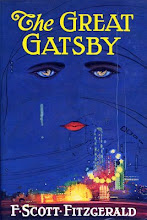
The Great Gatsby brings about a type of jealousy brought on by imagined or misperceived events. For example: Gatsby, although has quite a bit of money, is sought as a man of crime to people who haven’t much as seen his face. Irrational jealousy is not healthy at all. It is based on non-realistic paranoia and insecurity. People suffering from an irrational jealousy rely mostly on their feelings that something is wrong when there are no real signs that these feelings are genuine.


On the other hand, Myrtle and Tom have every right to be jealous. Myrtle, because she has to sit and watch Tom shift between a married and ‘un-married’ life: One- because he is not satisfied with Daisy; and Two: Tom doesn’t very much find Myrtle anymore fulfilling than Daisy was. He becomes even more depressed, coming to find out, that Daisy is no saint herself and has been having an affair with Gatsby.


However, without any shown belief of their jealousy, irrationally jealous individuals often sink in to a depression based on paranoia. They are convinced that they are right to be jealous even when the evidence does not quite support their beliefs. It will eventually be very difficult to show them the truth.


Wednesday, May 19, 2010

Mafia/Gangster

The 1920’s was the most legendary era in gangster history. The mafias are not only a secret organization but also a criminal gang. They have numerous political and economical controls in society. They carried guns everywhere they went and always beware of the enemies. They became a vast criminal oriented society. The mafias grew stronger and larger every single day. They also started to expand in gambling, bootlegging, and prostitution in order to earn more money and became wealthy. They had influences many American people to followed them. Members of the unified organization were required to take an initiation oath which included five basic principles.


1. A code of silence - Never to "rat out" any mafia member. Never to divulge any mafia secrets, even if they were threatened by torture or death.
2. Complete obedience to the boss - Obey the boss's orders, no matter what.
3. Assistance - To provide any necessary assistance to any other respected or befriended mafia faction.
4. Vengeance - Any attacks on family members must be avenged. "An attack on one is an attack on all."
5. Avoid contact with the authorities.


The mafias in the United States first became active in the New York City, gradually progressing from small neighborhood operations in poor Italian ghettos to citywide and eventually international activities. Their reputations have become entrenched in American popular culture, and have been portrayed in movies, TV shows, books and video games. In The Great Gatsby, I believe Jay Gatsby was suspected of being a mafia or relate to the mafias and gangster because he was wealthy and had a friend who was a gambler. For our English class we haven’t finish reading the book yet, so let’s see whether if Jay Gatsby is one of the mafias and doing illegal business or he’s a good and truthful person.

Tuesday, May 18, 2010

Unrequited Love

Unrequited Love:

(Noun) Love that is not given mutually.


   Jay Gatsby’s reunion with Daisy is where the novel starts to come alive. The story of their relationship exists only in prospect before Gatsby starts to move toward a dream that no one else can quite understand. The plot begins to shift its focus to the tensions between Gatsby and Daisy’s relationship as they actualize themselves. After Gatsby’s history with Daisy is revealed, a meeting between the two becomes incapable of being avoided, and it is obvious that the theme of the past’s significance to the future is called forth in this chapter. As the plot thickens its ideas of love and the American dream, it becomes clearer and clearer that Gatsby’s emotions are out of sync with the passage of time. Nervousness about the present and how Daisy’s attitude toward Gatsby, may have caused him to knock over Nick’s clock, symbolizing the clumsiness of his attempt to stop time and retrieve the past.

   Before the meeting, Daisy displays her usual sarcastic humor; when Nick invites her to tea and asks her not to bring Tom, she responds,
“Who is ‘Tom’?”
Yet, seeing Gatsby strips her of her bitterly ironic self. Gatsby forgets to play the role of the Oxford-educated socialite and shows to be a love-struck and awkward young man at his purest and most revealing state. Daisy’s emotions get the better of her when she is moved to sincerity by the passion Gatsby feels for her. When she goes to Gatsby’s house, she is overwhelmed with tears of joy at his success and sobs upon his piles of expensive English shirts.

   Nick’s arrangement of the meeting brings his practice of tolerance almost to a level of guilt, just as he had tolerantly observed Tom’s secret affair with Myrtle, so he eases the begging of what seems to be an affair for Daisy as well, aware of helping her wreck a meaningless marriage. However, Nick’s actions may be at least partially justified by the intense and sincere love that Gatsby and Daisy clearly feel for each other, a love that Nick sees to be absent from Daisy’s relationship with Tom.


Sunday, May 16, 2010

F. Scott Fitzgerald

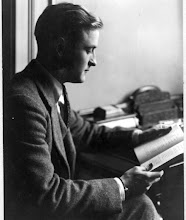
F. Scott Fitzgerald was born in St Paul, Minnesota of mixed Southern and Irish descent. He was given three names after the writer of The Star Spangled Banner, to whom he was distantly related. His father, Edward Fitzgerald, was a salesman, a Southern gentleman, whose furniture business had failed. Mary McQuillan, his mother, was the daughter of a successful wholesale grocer, and devoted to her only son. The family moved regularly, but settled finally in 1918 in St. Paul. At the age of 18 Fitzgerald fell in love with the 16-year-old Ginevra King, the prototype of Daisy Buchanan of The Great Gatsby. Fitzgerald started to write at St. Paul Academy. His first published story, 'The Mystery of the Raymond Mortgage' appeared in 1909 in Now and Then. Fitzgerald entered in 1913 Princeton University, where he failed to become a football hero. He left his studies in 1917 because of his poor academic records, and took up a commission in the US Army. His experiences during World War I were more peaceful than Hemingway's - he never saw action and even did not go to France. The Romantic Egoist, a novel started in Princeton, was returned from Scribner's with an encouraging letter.

Demobilized in 1919, Fitzgerald worked briefly in New York for an advertising agency. His first story, 'Babes in the Wood,' was published in The Smart Set. Fitzgerald received from it thirty dollars and bought with the money a pair of white flannels. The turning point in his life was when he met in 1918 Zelda Sayre, herself as aspiring writer, and married her in 1920. In the same year appeared Fitzgerald's first novel, THIS SIDE OF PARADISE, in which he used material from The Romantic Egoist. Its hero, Amory Blaine, studies in Princeton, serves in WW I in France. At the end of the story he finds that his own egoism has been the cause of his unhappiness. The book gained success which the Fitzgerald’s celebrated energetically in parties. Zelda danced on people's dinner tables. Doors opened for Fitzgerald into literary magazines, such as Scribner's and The Saturday Evening Post, which published his stories, among them 'The Diamond as Big as the Ritz.'

Fitzgerald's alcoholism and Zelda's mental breakdown attracted wide publicity in the 1930s. Fitzgerald learned that each breakdown made her final recovery less likely. His dependence on alcohol increased, in a letter to a friend he wrote: "A short story can be written on a bottle, but for a novel you need mental speed that enables you to keep the whole pattern in your head and ruthlessly sacrifice as Ernest did in "Farewell to Arms." If a mind is slowed up ever so little it lives in the individual part of a book rather than in a book as a whole; memory is dulled." He returned to Hollywood in 1937, where he met Sheilah Graham, a gossip columnist, with whom he lived for the rest of his life. Fitzgerald worked on various screenplays, but completed only one, THREE COMRADES (1938), before he was fired because of his drinking. The screenplay was based on Erich Maria Remarque's novel. When the young writer Budd Schulberg heard that he would cooperate with Fitzgerald in a film project, he said: "I thought he was dead." In a letter to his daughter from Hollywood in 1938 Fitzgerald revealed the "what I am doing here is the last tired effort of a man who once did something finer and better".

In 1939 Fitzgerald began a novel about Hollywood, THE LAST TYCOON, loosely based on the life of Irving Thalberg. Fitzgerald died on December 21, 1940, in Hollywood, in Graham's apartment, before the book was finished. Zelda Sayre died in a hospital fire in 1948. Their tragedy was basis Fitzgerald's novel Tender is the Night, which he revised repeatedly. His tortuous marriage was commented upon by Hemingway in A Moveable Feast (1964). In Tender is the Night a brilliant psychiatrist, Dick Diver, falls in love with a rich, beautiful mental patient, Nicole Warren. He marries her, and loses his idealism and potential for a great career, but Nicole, having battened on Dick's strength and love for ten years, emerges victorious. Fitzgerald's novel Trimalchion, which appeared in 1999, was partly based on Petronius' (died AD 66) Satyricon. The vulgar and rich Trimalchio, whose banquet Petronius satirized in his work, was the literary prototype of Jay Gatsby. The Great Gatsby was originally to be entitled Trimalchio's Banquet.

Source: http://www.kirjasto.sci.fi/fsfitzg.htm

F. Scott Fitzgerald has been involved in Hollywood life and it's where he got his inspiration from. Most of his works relied on social events and people. Many people love his works and said that he was one of the greatest author of all. I believe his books combined real life situations and descbribe deeply about what's happening in that period of time. He also used beautiful language. It expresses more emotions and feelings through these words and to make the readers follow, abosrb, and imagine as the readers read through his books.

Friday, May 14, 2010

Old vs. New Money

The Different between old and new money

In these modern days of economic struggle, it is pretty easy for us to determine who has come upon ‘new money’ and some that have been rich beyond their years. On various occasions people of the ‘new money’ category have found that their money is much harder to hold on to than ‘old money’. This is due to the fact that people of the ‘old money’ case have deeply rooted their earnings; which would have to take a huge tragedy to get rid of.

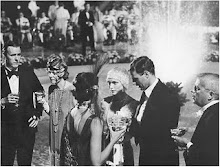
One of the major topics explored in The Great Gatsby is the sociology of wealth, specifically, how the newly minted millionaires of the 1920s differ from and relate to the old aristocracy of the country’s richest families. In the novel, West Egg and its denizens represent the newly rich, while East Egg and its denizens, especially Daisy and Tom, represent the old aristocracy. Fitzgerald portrays the newly rich as being vulgar, gaudy, ostentatious, and lacking in social graces and taste.
 Gatsby, for example, lives in a monstrously ornate mansion, wears a pink suit, drives a Rolls-Royce, and does not pick up on subtle social signals, such as the insincerity of the Sloanes’ invitation to lunch. In contrast, the old aristocracy possesses grace, taste, subtlety, and elegance, epitomized by the Buchanans’ tasteful home and the flowing white dresses of Daisy and Jordan Baker. What the old aristocracy possesses in taste, however, it seems to lack in heart, as the East Eggers prove themselves careless, inconsiderate bullies who are so used to money’s ability to ease their minds that they never worry about hurting others.

http://www.sparknotes.com/lit/gatsby/themes.html

The residents of East Egg are considered to be the “old rich”, which means that they have money that has been passed down for generations. The West Egg residents, on the other hand, as those who have “new money” – characters like Gatsby who were not born with the millions of dollars that they have. The relationship between these two groups is seen clearly in the first and only Gatsby party that Tom and Daisy attend. Tom, as most of the East Egg residents, feels that he is better than the West Egg residents. Tom makes numerous comments pertaining to this -- how he does not belong there or in reference to the other people who do attend the parties. The fact that Daisy tells Gatsby that she did not like the party also coincides with this feeling of “elatedness” from the East Egg residents. Additionally, those who were of the old rich do not feel the need to have to show off as those of West Egg would have done. Gatsby is a perfect example of this if you look at the color of his shirts, the color of his car, the clothes that he wears on his first meeting with Daisy, and the extravagance of his mansion.

http://www.enotes.com/great-gatsby/q-and-a/how-do-you-would-describe-relationship-between-60669

Wednesday, May 12, 2010

1920's

The Beginning of a New Era

During the 1920s, many new philosophies were born in different people's heads. Freud is an example of a philosopher who greatly influenced people of the 1920s, but there were many others who began believing more modern ideas, who were called modernists. The Scopes Trial is an example of modernism and how influential it was. The Scopes Trial was, in actuality, a fight between modernists and traditionalists. The traditionalists, such as prosecutor William Jennings Bryan, wanted the teaching of evolution to stay illegal and Scopes to be arrested for teaching it in public school, because they believed very traditional ideas in all aspects of life.

The modernists, however, such as the defense attorney Clarence Darrow, believed that there should be freedom in the schools and new scientific theories should be able to be taught. Modernism was obviously spreading throughout the country, because many people were in support of Scopes and Darrow, because they thought it was ridiculous that the intellectualism of the citizens of America could be limited as greatly as the traditionalists wanted.

Modernism defines the Jazz Age, as people hungrily accepted new technologies and ideas that feats and projects that would have been thought unattainable prior to this age, such as a woman being able to cross the Atlantic in an airplane, were actually possible. People developed new literary techniques, as well, such as free verse and stream of consciousness, in order to express the new reality of the 1920s; that America was moving forward technologically, intellectually, and socially as never thought possible before.

Modernist ideas were widely accepted by most people, especially of the younger generations, and while there were still many traditionalists around who wanted to fight these modern ideas, modernism prevailed and the nation continued making strives toward becoming all it could have become. These modernist ideas greatly affected the next steps of the country, and if an intellectual revolution such as the one during the 1920s had never happened, there is no telling what American culture would be like today.

The 1920s was an era of change in many ways, but culturally America was changed forever, for the better. People began to adopt new ideas and technologies that are much more similar to the way our culture is today, and how we live ours today.


Tuesday, May 11, 2010

what the FLAPP'

         what the Flapp'

The flapper style brought about feelings of independence and luxury to the 1920s. People during this time were loose and care-free about the conservative norm; not really thinking about the consequences of their actions. New dances, such as “the Charleston”, were very popular because of the way it allowed them to move and glide across the dance floor. Conservatives opposed this way of living, but flappers often said that it shouldn’t matter what they do…
“as long as you don’t do it in the street and frighten the horses.”
Women were just as anxious as the men to avoid returning to society’s rules and roles after the war. In the age of the Gibson Girl, young women did not date, they waited until a proper young man formally paid her interest with suitable intentions (i.e. marriage). However, nearly a whole generation of young men had died in the war, leaving nearly a whole generation of young women without possible suitors. Young women decided that they were not willing to waste away their young lives waiting idly for spinsterhood; they were going to enjoy life.

http://history1900s.about.com/od/1920s/a/flappers.htm

The term flapper originated in Great Britain, where there was a short fad among young women to wear rubber galoshes (an overshoe worn in the rain or snow) left open to flap when they walked. The name stuck, and throughout the United States and Europe flapper was the name given to liberated young women. Flappers were bold, confident, and sexy. They tried new fad diets in an effort to achieve a fashionable thinness, because new fashions required slim figures, flat chests, and slim hips. The flapper dress was boxy and hung straight from shoulder to knee, with no waistline, allowing much more freedom of movement than women’s fashions before the 1920s. While it did not show breasts or hips, it did show a lot of leg, and the just-below-the-knee length horrified many of the older generation.
  Flappers also shocked conservatives by cutting their hair short and wearing makeup. Before the 1920s long hair was the mark of a respectable lady, but flappers had no time for elaborate hairdos. They cut, or bobbed, their hair just below the ears and curled it in dozens of tiny spit curls with a new invention called a bobby pin. Some also used electric curling irons to create small waves called “marcels,” named after Marcel Grateau (1852–1936), the French hair stylist who invented them. Cosmetics had long been associated with prostitutes and actresses, but flappers considered it glamorous to wear dark red lipstick, lots of rouge, and thick black lines around their eyes, sometimes made with the burned end of a matchstick. New cosmetics companies including Maybelline and Coty began manufacturing products to help women achieve the new look. For the first time, women began to carry cosmetics with them in handbag wherever they went.

Despite the youthful enthusiasm for flapper style, some people felt threatened by it. When hemlines began to rise, several states made laws charging fines to women wearing skirts with hemlines more than three inches above the ankle, and many employers fired women who bobbed their hair. However, in the excitement and gaiety that followed the end of World War I in 1918, the movement toward a freer fashion could not be stopped by those who valued the old ways. It took the stock market crash of 1929 to bring the era of the flapper to a sudden end. Almost overnight, the arrival of an economic depression brought a serious tone to society. Women's hemlines dropped again, and the carefree age of the  flapper was over. 

http://www.fashionencyclopedia.com/fashion_costume_culture/Modern-World-1919-1929/Flappers.html